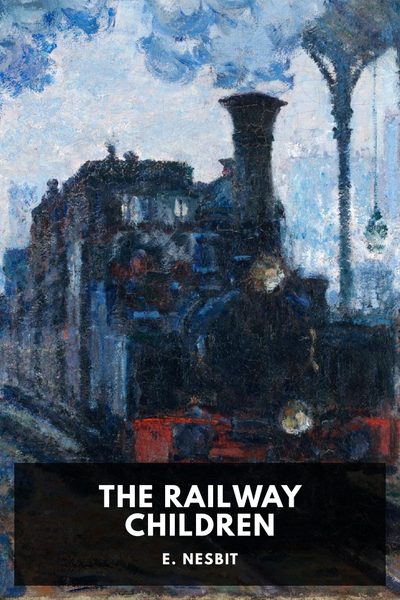
Los niños del ferrocarril en inglés: ¿qué nivel necesitas? (B1)
Los niños del ferrocarril, E. Nesbit, 1906
- Palabras
- 59.907
- Palabras distintas
- 3775
- Palabras poco frecuentes
- 11%
- Horas de lectura
- 5
Cómodo si ya lees textos cortos en inglés.
Es asequible en el nivel B1 si ya lees textos cortos en inglés. El 11% de sus 59.907 palabras queda fuera de las 3000 más comunes y el libro lleva unas 5 horas.
A quién le va bien
Lectores de nivel B1 que siguen textos cortos en inglés y quieren un primer libro largo con una trama que tire de ellos.
Una historia familiar junto a una línea de tren en el campo inglés. Las frases son cortas y los diálogos claros. El vocabulario es cotidiano, salvo las palabras sobre trenes, carbón y el canal: porter, chimney, barge. Algunos modos de hablar de la época eduardiana suenan anticuados, pero la historia es suave y fácil de seguir.
Palabras poco frecuentes que vuelven una y otra vez
- coal61
- railway57
- birthday43
- canal33
- porter31
- chimney29
- everybody23
- jersey23
- barge21
- bill21
- bun20
- driver18
- awfully17
- chap17
- dragon17
- handkerchief17
- jolly17
- newspaper17
- flannel16
- petticoat16
Verbos con partícula que te vas a encontrar
- go on41
- come out21
- go out19
- come down18
- come in16
- come on16
- get up16
- let go16
- go down15
- go up14
- look at14
- find out12
- get out12
- sit down12
- go by11
Cómo empieza
The Beginning of Things
They were not railway children to begin with. I don’t suppose they had ever thought about railways except as a means of getting to Maskelyne and Cook’s, the Pantomime, Zoological Gardens, and Madame Tussaud’s. They were just ordinary suburban children, and they lived with their father and mother in an ordinary redbrick-fronted villa, with coloured glass in the front door, a tiled passage that was called a hall, a bathroom with hot and cold water, electric bells, French windows, and a good deal of white paint, and “every modern convenience,” as the house-agents say.
There were three of them. Roberta was the eldest. Of course, mothers never have favourites, but if their mother had had a favourite, it might have been Roberta. Next came Peter, who wished to be an engineer when he grew up; and the youngest was Phyllis, who meant extremely well.
Mother did not spend all her time in paying dull calls to dull ladies, and sitting dully at home waiting for dull ladies to pay calls to her. She was almost always there, ready to play with the children, and read to them, and help them to do their home-lessons. Besides this she used to write stories for them while they were at school, and read them aloud after tea, and she always made up funny pieces of poetry for their birthdays and for other great occasions, such as the christening of the new kittens, or the refurnishing of the doll’s house, or the time when they were getting over the mumps.
These three lucky children always had everything they needed: pretty clothes, good fires, a lovely nursery with heaps of toys, and a Mother Goose wallpaper. They had a kind and merry nursemaid, and a dog who was called James, and who was their very own. They also had a father who was just perfect —never cross, never unjust, and always ready for a game —at least, if at any time he was not ready, he always had an excellent reason for it, and explained the reason to the children so interestingly and funnily that they felt sure he couldn’t help himself.
You will think that they ought to have been very happy. And so they were, but they did not know how happy till the pretty life in the Red Villa was over and done with, and they had to live a very different life indeed.
The dreadful change came quite suddenly.
Peter had a birthday —his tenth. Among his other presents was a model engine more perfect than you could ever have dreamed of. The other presents were full of charm, but the engine was fuller of charm than any of the others were.
Its charm lasted in its full perfection for exactly three days. Then, owing either to Peter’s inexperience or Phyllis’s good intentions, which had been rather pressing, or to some other cause, the engine suddenly went off with a bang. James was so frightened that he went out and did not come back all day. All the Noah’s Ark people who were in the tender were broken to bits, but nothing else was hurt except the poor little engine and the feelings of Peter. The others said he cried over it —but of course boys of ten do not cry, however terrible the tragedies may be which darken their lot. He said that his eyes were red because he had a cold.
Preguntas frecuentes
¿Sirve Los niños del ferrocarril para aprender inglés?
Sí, si tienes un nivel B1 aproximado. La trama te lleva por las palabras desconocidas.
¿Qué nivel de inglés necesito para leer Los niños del ferrocarril?
Más o menos B1. Es nuestra estimación solo por vocabulario: contamos las palabras fuera de las 3000 más comunes y no medimos la longitud de las frases ni el estilo antiguo.
¿Cuánto se tarda en leer Los niños del ferrocarril?
59.907 palabras, unas 5 horas a una velocidad media de lectura. A 20 minutos al día son unos 15 días.