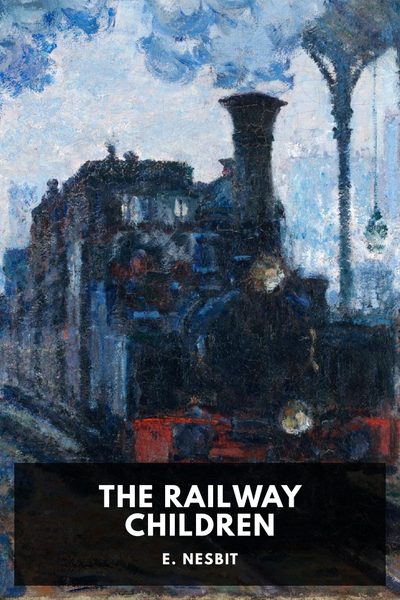
As Crianças da Ferrovia em inglês: que nível você precisa ter? (A2)
As Crianças da Ferrovia, E. Nesbit, 1906
- Palavras
- 59.907
- Palavras distintas
- 3.775
- Palavras pouco frequentes
- 11%
- Palavras por frase
- 13.1
- Horas de leitura
- 5
Poucas palavras pouco frequentes. Um bom primeiro livro.
Não, As Crianças da Ferrovia não é difícil. É uma leitura fácil de nível A2: só 11% das 59.907 palavras ficam fora das 3000 mais comuns, as frases têm em média 13.1 palavras e o livro leva cerca de 5 horas.
Para quem combina
Leitores de nível A1 a A2 que querem um primeiro livro de verdade em inglês e não se importam de consultar uma palavra de vez em quando.
Uma história de família ao lado de uma linha de trem no campo inglês. As frases são curtas e os diálogos claros. O vocabulário é cotidiano, exceto as palavras sobre trens, carvão e o canal: porter, chimney, barge. Alguns modos de falar da era eduardiana soam antiquados, mas a história é suave e fácil de acompanhar.
Palavras pouco frequentes que voltam várias vezes
- coal61
- railway57
- birthday43
- canal33
- porter31
- chimney29
- everybody23
- jersey23
- barge21
- bill21
- bun20
- driver18
- awfully17
- chap17
- dragon17
- handkerchief17
- jolly17
- newspaper17
- flannel16
- petticoat16
Phrasal verbs que você vai encontrar
- go on41
- come out21
- go out19
- come down18
- come in16
- come on16
- get up16
- let go16
- go down15
- go up14
- look at14
- find out12
- get out12
- sit down12
- go by11
Como começa
The Beginning of Things
They were not railway children to begin with. I don’t suppose they had ever thought about railways except as a means of getting to Maskelyne and Cook’s, the Pantomime, Zoological Gardens, and Madame Tussaud’s. They were just ordinary suburban children, and they lived with their father and mother in an ordinary redbrick-fronted villa, with coloured glass in the front door, a tiled passage that was called a hall, a bathroom with hot and cold water, electric bells, French windows, and a good deal of white paint, and “every modern convenience,” as the house-agents say.
There were three of them. Roberta was the eldest. Of course, mothers never have favourites, but if their mother had had a favourite, it might have been Roberta. Next came Peter, who wished to be an engineer when he grew up; and the youngest was Phyllis, who meant extremely well.
Mother did not spend all her time in paying dull calls to dull ladies, and sitting dully at home waiting for dull ladies to pay calls to her. She was almost always there, ready to play with the children, and read to them, and help them to do their home-lessons. Besides this she used to write stories for them while they were at school, and read them aloud after tea, and she always made up funny pieces of poetry for their birthdays and for other great occasions, such as the christening of the new kittens, or the refurnishing of the doll’s house, or the time when they were getting over the mumps.
These three lucky children always had everything they needed: pretty clothes, good fires, a lovely nursery with heaps of toys, and a Mother Goose wallpaper. They had a kind and merry nursemaid, and a dog who was called James, and who was their very own. They also had a father who was just perfect —never cross, never unjust, and always ready for a game —at least, if at any time he was not ready, he always had an excellent reason for it, and explained the reason to the children so interestingly and funnily that they felt sure he couldn’t help himself.
You will think that they ought to have been very happy. And so they were, but they did not know how happy till the pretty life in the Red Villa was over and done with, and they had to live a very different life indeed.
The dreadful change came quite suddenly.
Peter had a birthday —his tenth. Among his other presents was a model engine more perfect than you could ever have dreamed of. The other presents were full of charm, but the engine was fuller of charm than any of the others were.
Its charm lasted in its full perfection for exactly three days. Then, owing either to Peter’s inexperience or Phyllis’s good intentions, which had been rather pressing, or to some other cause, the engine suddenly went off with a bang. James was so frightened that he went out and did not come back all day. All the Noah’s Ark people who were in the tender were broken to bits, but nothing else was hurt except the poor little engine and the feelings of Peter. The others said he cried over it —but of course boys of ten do not cry, however terrible the tragedies may be which darken their lot. He said that his eyes were red because he had a cold.
Perguntas frequentes
As Crianças da Ferrovia serve para aprender inglês?
Serve. Tem poucas palavras raras, então é um primeiro livro amigável.
Que nível de inglês preciso para ler As Crianças da Ferrovia?
Mais ou menos A2. É a nossa estimativa a partir de duas coisas: a proporção de palavras fora das 3000 mais comuns e o tamanho médio das frases (13.1 palavras aqui). Não medimos o estilo antigo.
Quanto tempo leva para ler As Crianças da Ferrovia?
59.907 palavras, cerca de 5 horas numa velocidade média de leitura. A 20 minutos por dia, são uns 15 dias.