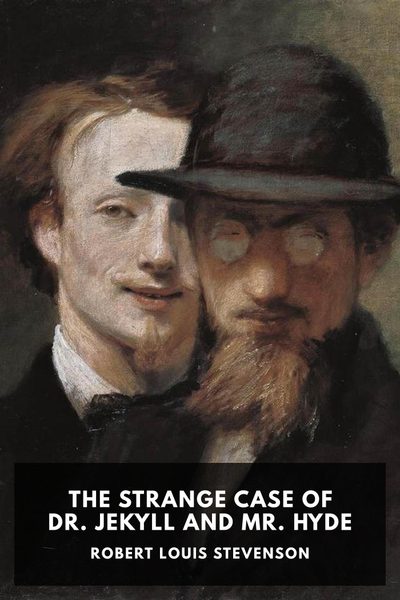
El extraño caso del doctor Jekyll y el señor Hyde en inglés: ¿qué nivel necesitas? (B2)
El extraño caso del doctor Jekyll y el señor Hyde, Robert Louis Stevenson, 1886
- Palabras
- 25.669
- Palabras distintas
- 3315
- Palabras poco frecuentes
- 13%
- Palabras por frase
- 20.2
- Horas de lectura
- 2.1
Espera una palabra nueva en casi cada párrafo.
Es bastante difícil. Calculamos El extraño caso del doctor Jekyll y el señor Hyde en el nivel B2: el 13% de sus 25.669 palabras queda fuera de las 3000 más comunes, las frases tienen de media 20.2 palabras, así que verás una palabra nueva en casi cada párrafo. Se lee en unas 2.1 horas.
A quién le va bien
Lectores de nivel B2 que terminan novelas más sencillas sin problema y quieren ampliar vocabulario. Léelo en sesiones cortas cada día.
Una historia de terror breve y famosa, de unas 25.000 palabras, contada sobre todo a través de un abogado y de cartas. Las frases son formales y la trama se despliega despacio, como un misterio. Las palabras poco frecuentes vienen del Londres victoriano: cabinet, butler, cheque, laboratory, drug. Los dos últimos capítulos están escritos como confesiones y son la parte más difícil.
Palabras poco frecuentes que vuelven una y otra vez
- cabinet28
- drug13
- aye12
- butler12
- self11
- theatre11
- visitor11
- cheque10
- laboratory10
- seal10
- address9
- bystreet9
- conscious9
- countenance9
- murderer9
- wine9
- colour8
- compound7
- conscience7
- disappearance7
Verbos con partícula que te vas a encontrar
- sit down7
- break in4
- come about4
- come out4
- go in4
- light up4
- come back3
- come in3
- set down3
- set out3
- break out2
- bring on2
- come over2
- deal with2
- go out2
Cómo empieza
Mr. Utterson the lawyer was a man of a rugged countenance that was never lighted by a smile; cold, scanty and embarrassed in discourse; backward in sentiment; lean, long, dusty, dreary and yet somehow lovable. At friendly meetings, and when the wine was to his taste, something eminently human beaconed from his eye; something indeed which never found its way into his talk, but which spoke not only in these silent symbols of the after-dinner face, but more often and loudly in the acts of his life. He was austere with himself; drank gin when he was alone, to mortify a taste for vintages; and though he enjoyed the theatre, had not crossed the doors of one for twenty years. But he had an approved tolerance for others; sometimes wondering, almost with envy, at the high pressure of spirits involved in their misdeeds; and in any extremity inclined to help rather than to reprove. “I incline to Cain’s heresy,” he used to say quaintly: “I let my brother go to the devil in his own way.” In this character, it was frequently his fortune to be the last reputable acquaintance and the last good influence in the lives of downgoing men. And to such as these, so long as they came about his chambers, he never marked a shade of change in his demeanour.
No doubt the feat was easy to Mr. Utterson; for he was undemonstrative at the best, and even his friendships seemed to be founded in a similar catholicity of good-nature. It is the mark of a modest man to accept his friendly circle ready-made from the hands of opportunity; and that was the lawyer’s way. His friends were those of his own blood or those whom he had known the longest; his affections, like ivy, were the growth of time, they implied no aptness in the object. Hence, no doubt, the bond that united him to Mr. Richard Enfield, his distant kinsman, the well-known man about town. It was a nut to crack for many, what these two could see in each other, or what subject they could find in common. It was reported by those who encountered them in their Sunday walks, that they said nothing, looked singularly dull, and would hail with obvious relief the appearance of a friend. For all that, the two men put the greatest store by these excursions, counted them the chief jewel of each week, and not only set aside occasions of pleasure, but even resisted the calls of business, that they might enjoy them uninterrupted.
It chanced on one of these rambles that their way led them down a bystreet in a busy quarter of London. The street was small and what is called quiet, but it drove a thriving trade on the weekdays. The inhabitants were all doing well, it seemed, and all emulously hoping to do better still, and laying out the surplus of their gains in coquetry; so that the shop fronts stood along that thoroughfare with an air of invitation, like rows of smiling saleswomen. Even on Sunday, when it veiled its more florid charms and lay comparatively empty of passage, the street shone out in contrast to its dingy neighbourhood, like a fire in a forest; and with its freshly painted shutters, well-polished brasses, and general cleanliness and gaiety of note, instantly caught and pleased the eye of the passenger.
Preguntas frecuentes
¿Sirve El extraño caso del doctor Jekyll y el señor Hyde para aprender inglés?
Sí, a partir de B2. Por debajo se hará lento.
¿Qué nivel de inglés necesito para leer El extraño caso del doctor Jekyll y el señor Hyde?
Más o menos B2. Es nuestra estimación a partir de dos cosas: la proporción de palabras fuera de las 3000 más comunes y la longitud media de las frases (20.2 palabras aquí). No medimos el estilo antiguo.
¿Cuánto se tarda en leer El extraño caso del doctor Jekyll y el señor Hyde?
25.669 palabras, unas 2.1 horas a una velocidad media de lectura. A 20 minutos al día son unos 7 días.